Ship’s Motor Enclosures
Enclosure protection for electrical equipment is defined in terms of its opposition to the ingress of solid particles and liquids.
The enclosure protection is defined by the Ingress Protection (lP) Code where a two figure number is used to indicate the degree of protection against the ingress of solids and liquids.
Drip-proof open ventilated motors are used where the risk of liquids leaking from overhead pipes and valves may be a problem.
Air is drawn into the machine by an internal fan to provide cooling.
The ventilation ducts are fitted with mesh screens to prevent any objects from entering the motor and causing damage.
These screens must always be kept clean and free from dust otherwise the motor will overheat due to inadequate ventilation.
When a greater degree of protection is required the enclosure is made totally Enclosed Fan Ventilated (TEFY) and jet-proof.
No external at is allowed inside the motor.
To improve heat transfer the motor casing is finned to increase the surface area, and airflow across the fins is achieved by means of an external fan and cowl arrangement.
Motors located outside on weather decks have deck watertight enclosures but the external fan is omitted because of the possibility of ice formation.
Deck watertight motors (IP56) have sealed bearings and a watertight terminal box.
They can be completely immersed in shallow water for short periods.
Sealing washers are fitted under all screws and a coat of special corrosion resisting paint is generally applied to all external and internal surfaces.
Deck motors for tankers must have a flameproof (Exd) enclosure if they are within 3m (4.5m for some ships) of an oil tank outlet.
Motor Ratings on ship
The motor converts electrical energy taken from the electric power supply into rotational mechanical energy at the motor shaft.
Power losses occur during the energy conversion which results in the production of heat in the motor.
These losses in crease when the load on the motor increases because the motor takes more current from the supply.
The life of the insulating materials used on motor windings depends on the temperature at which it is operated.
Insulating materials are selected for marine practice based on an ambient temperature of 45 degree. An adequate life-span for the insulation is based on the assumption that the maximum temperature limit is not exceeded.
Ship’s Motor nameplate definitions:
Rated FuIl Load Current (FLC) of ship motor
This is the maximum value of current that the motor can continuously take from the supply without exceeding the temperature limit for the insulating materials used.
Rated Voltage of ship motor
The motor has been designed to operate successfully when connected to this value of supply voltage. If the rated voltage is not applied, overheating, stalling and burn-out can result.
Rated Frequency of ship motor
The motor speed is directly affected by the supply frequency so are the motor losses. If the motor is operated at other than rated frequency overheating can occur.
Power Rating of ship motor
This is the shaft power output of the motor when it is connected to rated voltage and frequency when drawing its rated current from the supply.
Rated Speed of ship motor
This is the full load speed of the motor when connected to rated voltage and frequency.
lP Number of ship motor
Indicates the degree of protection given by the motor enclosure.
Standard three-phase a.c. induction motors are manufactured in about 60 frame sizes with power ratings from about 0.37 kW to 500 kW.
A sample selection of output power ratings and their average full load current (FLC) for A-pole, 440 V motors are listed below:

Profesional Tool For Electro Technical Officer (ETO)
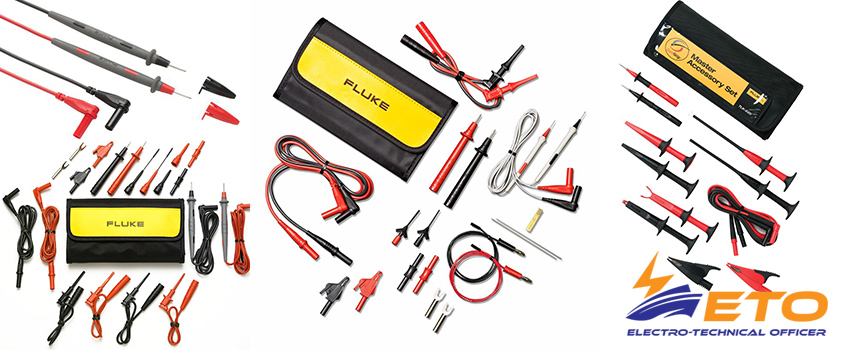
Best price for FLUKE accessories